
PODCAST
How Flagright uses AI to keep your money safe | Baran Ozkan, Flagright





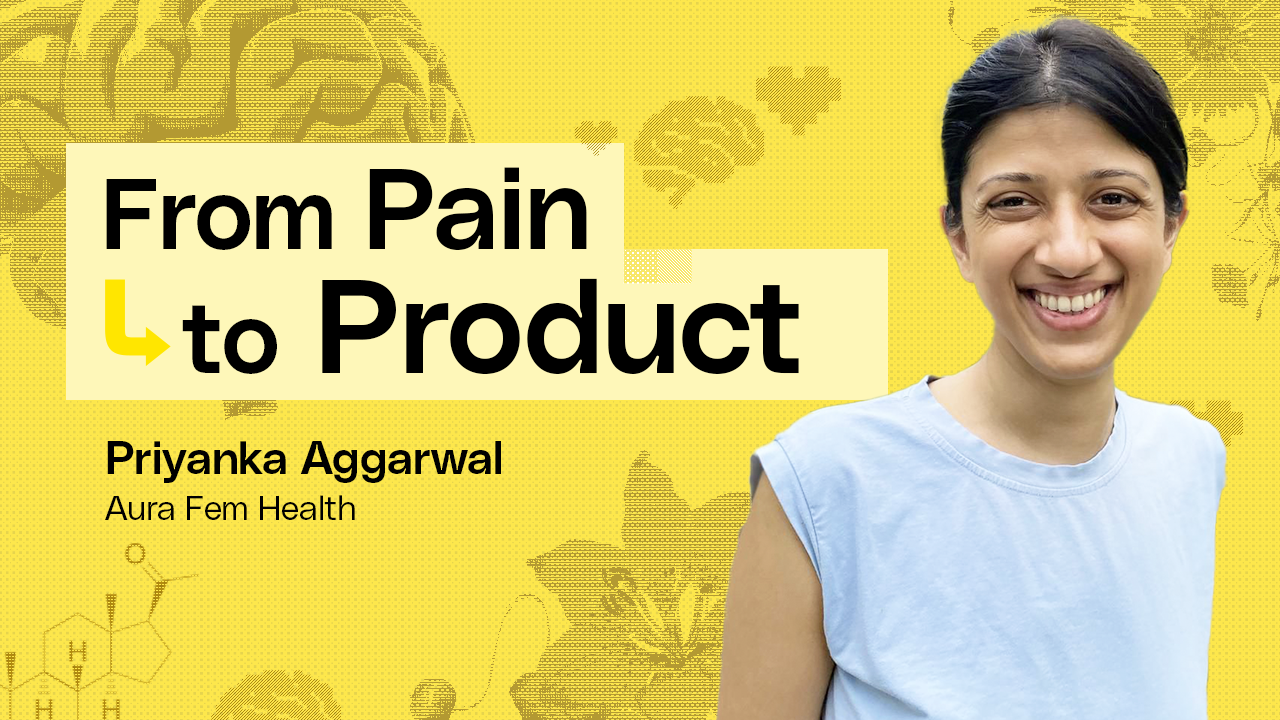
Growing up in India watching her mother silently endure mood fluctuations and hot flashes, Priyanka Aggarwal developed a deep sensitivity to others' pain. But it wasn't until her own health concerns — severe PMS, shrinking periods, and "hyper fluctuating" moods — that she fully understood the scope of the problem.
When she started talking openly about her struggles, the response was universal: "Every woman I spoke to said, 'that's me.'" Yet doctors offered only birth control pills or dismissed their concerns as "normal."
As founder of Aura Fem Health, Priyanka is tackling systemic negligence in women's healthcare with a radical approach: personalised, holistic well-being that treats women as whole humans, not collections of symptoms.
"Nine out of every ten women are silently suffering and we are here to offer them personalised plans, access to practitioners, community support and basically whatever they want from a non-synthetic approach in one place," she explains.
Her journey to this mission began with building her own solution. Frustrated by dismissive healthcare, she assembled a panel of three women — a behavioural scientist, naturopath, and gynaecologist. The transformation was remarkable, leading her to realise that "this is the kind of access every woman deserves because only then they can feel their best."
👏 Dive deeper into this conversation and many others with innovative founders on the Unsensible Podcast:
What started as helping friends became too big to handle manually. Her formal research interviewing thousands of women revealed the staggering truth: women were telling her "this is the first time someone's told me that it's not my mistake the way I'm feeling."
"I remember watching older colleagues at work retreat to washrooms discussing hot flashes, then emerge as if nothing was wrong.”
The final confirmation came from an unexpected source: her son's transformation from calling her "the most angriest mom" to inviting friends home to meet "the sweetest person."
What drives her? A belief that women deserve to understand their own physiology in a system that profits from keeping them uninformed. "It won't make money to educate women about their physiology so that they can make some small lifestyle shifts," she explains. "But that's the biggest change we can drive."
Her approach challenges startup stereotypes too. "I highly challenge that stereotypical image. You do it your way... Your startup journey, your organisation journey, your life journey is yours alone."
For Priyanka, success isn't measured in traditional metrics: "The real metrics are the changes we see in our users: how their health improves, how they feel more in control of their bodies."
Her vision is ambitious yet clear: "We are coming out of 2,000 years of systemic negligence towards women health... I'm envisioning a platform where any woman can find the support she is looking for and integrate that in her daily flow."